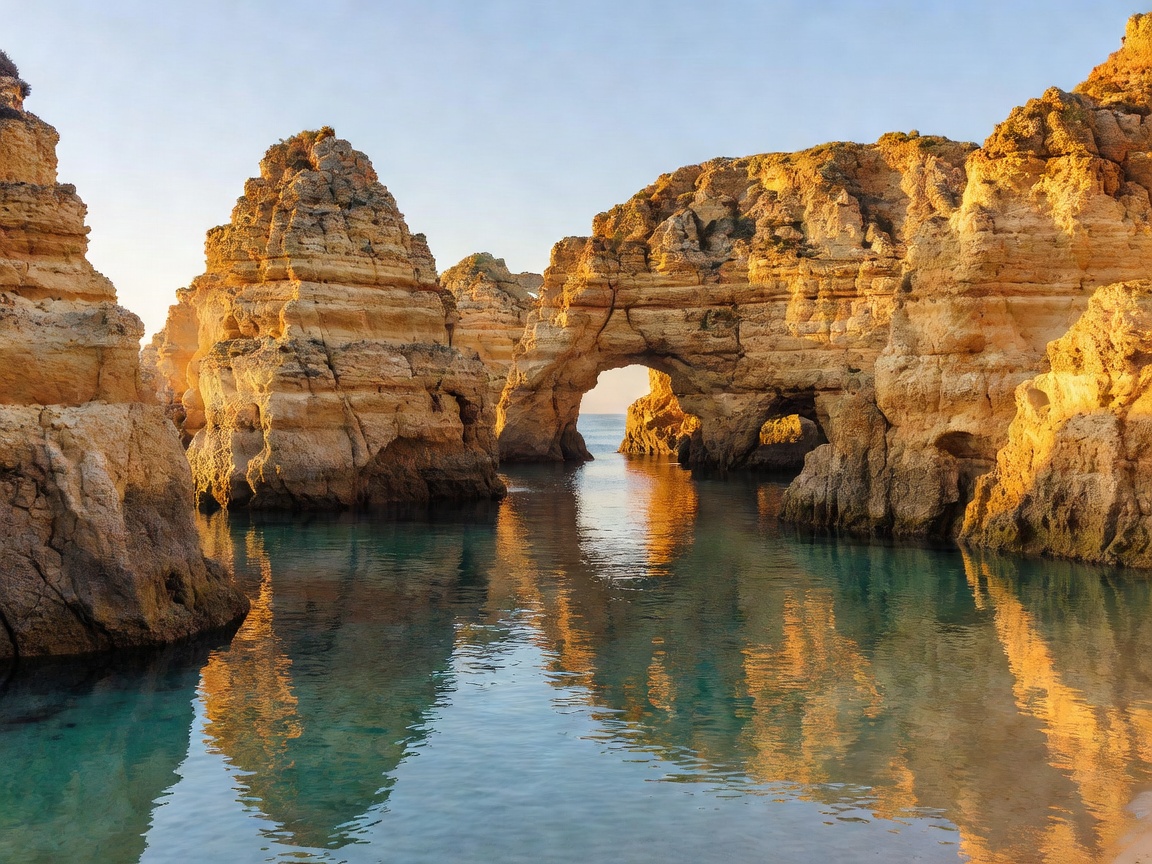
Geomorphology of the Karstic Coast
The distinctive aesthetic of the western Algarve (Barlavento) stems from Miocene-era limestone and calcarenite deposits that have undergone millions of years of karstification. Rainwater, mildly acidic from atmospheric carbon dioxide, percolates down through vertical joint lines in the stone, hollowing out subterranean conduits and caverns.
When wave action hollows out the cliff bases, subterranean cavern roofs collapse to form sinkholes (algares) and dramatic natural skylights. The famous Benagil Sea Cave (Algar de Benagil) is a classic example: a soaring marine domed hall featuring twin ocean arches and a circular oculus opening straight up to the cliff surface above.
The Seven Hanging Valleys Trail (Sete Vales Suspensos)
Spanning 5.7 kilometers (11.4 km round-trip) between Praia da Marinha in the east and Praia de Vale Centeanes in the west, the Seven Hanging Valleys trail provides the definitive terrestrial traverse of the Algarve’s limestone coastline.
The path navigates a series of suspended dry valleys—ancient stream beds whose drainage points were severed when coastal cliffs receded inland under maritime erosion. Highlights include:
- Praia da Marinha: Consistently recognized for its iconic double-arched sea stack (Arco Natural) and clear turquoise swimming waters sheltered from prevailing northerlies.
- Algar Seco: A network of karst blowholes, chimneys, and grotto windows carved into the stone near Carvoeiro, accessible via wooden boardwalks.
- Cabo Carvoeiro Lighthouse: A historic navigational beacon standing watch over deep offshore drop-offs where local seabirds nest in sheer fissures.
"The contrast of the Algarve is chromatic: honey-gold limestone contrasting with ultra-saturated cyan Atlantic swells, bordered above by pale green maritime juniper and aromatic thyme."
The Contrast: Costa Vicentina and Sagres
Continuing west past Lagos toward Cape St. Vincent (Cabo de São Vicente) and the Costa Vicentina Natural Park, the geology and character change completely. The sheltered golden limestone coves give way to sheer dark schist and grey sandstone cliffs battered by the full force of northern Atlantic swells.
Sagres represents the end of the sheltered Mediterranean-influenced shoreline. Winds are fierce and persistent; temperatures remain cool even at the height of summer, and the atmosphere feels wild and untamed. For hikers and coastal explorers seeking solitude away from umbrella-lined resort strips, the Rota Vicentina cliff trails offer hundreds of kilometers of pristine wilderness.
Algarve Advantages
- Consistently the sunniest region in continental Europe (over 300 days/year).
- Dramatic geological formations directly accessible on marked clifftop trails.
- Exceptional maritime boat and sea-kayak access to marine caverns.
- World-class fresh grilled fish cuisine across coastal fishing ports.
Field Realities
- Intense July–August tourism leads to packed beaches and heavy parking congestion.
- Limestone cliff edges are subject to spontaneous collapse; avoid sitting near overhangs.
- Atlantic water temperatures remain relatively cool (18–21°C) even in midsummer.
- Public bus transit between remote trailheads is sparse; rental car or ride-share required.
Field Safety & Marine Cave Regulations
Coastal authorities strictly enforce safety perimeters along the Barlavento cliffs. Due to ongoing marine undercut, natural landslides occur without warning. Never step past posted wooden warning fences or set beach towels directly under vertical cliff walls.
Regarding the Benagil Cave: maritime safety ordinances periodically restrict swimming and private paddleboarding into the interior due to boat turbulence and tidal surges. Certified small-boat tours departing from Benagil or Portimão operate under strict coastguard oversight and provide the safest viewing access.