Granite Baroque & Azulejo Splendor
Unlike Lisbon's warm lioz limestone, Porto is carved from hard grey northern granite. This igneous bedrock gives the city's ecclesiastical architecture a somber, fortified monumentality that is softened dramatically by intricate tile facades and gilded interiors.
Nowhere is this dynamic clearer than at the Igreja de São Francisco. Behind a restrained Gothic-Baroque exterior lies an interior coated in more than 300 kilograms of gold leaf applied to elaborate Baroque woodcarvings (talha dourada). Nearby, the São Bento railway station features a grand vestibule lined with approximately 20,000 blue and white ceramic tiles executed by Jorge Colaço between 1905 and 1916, chronicling momentous events such as the Battle of Valdevez and the arrival of King João I in Porto.
The Ribeira & Vila Nova de Gaia Dual Axis
The Douro River defines Porto’s urban geography. On the northern bank, the UNESCO-listed Cais da Ribeira clings to the cliffs with narrow medieval houses painted in ochre, oxide red, and teal. Traditional flat-bottomed wooden cargo boats, known as barcos rabelos, historically hauled casks of fortified wine down the river's treacherous rapids before modern hydro dams stabilized the waterway.
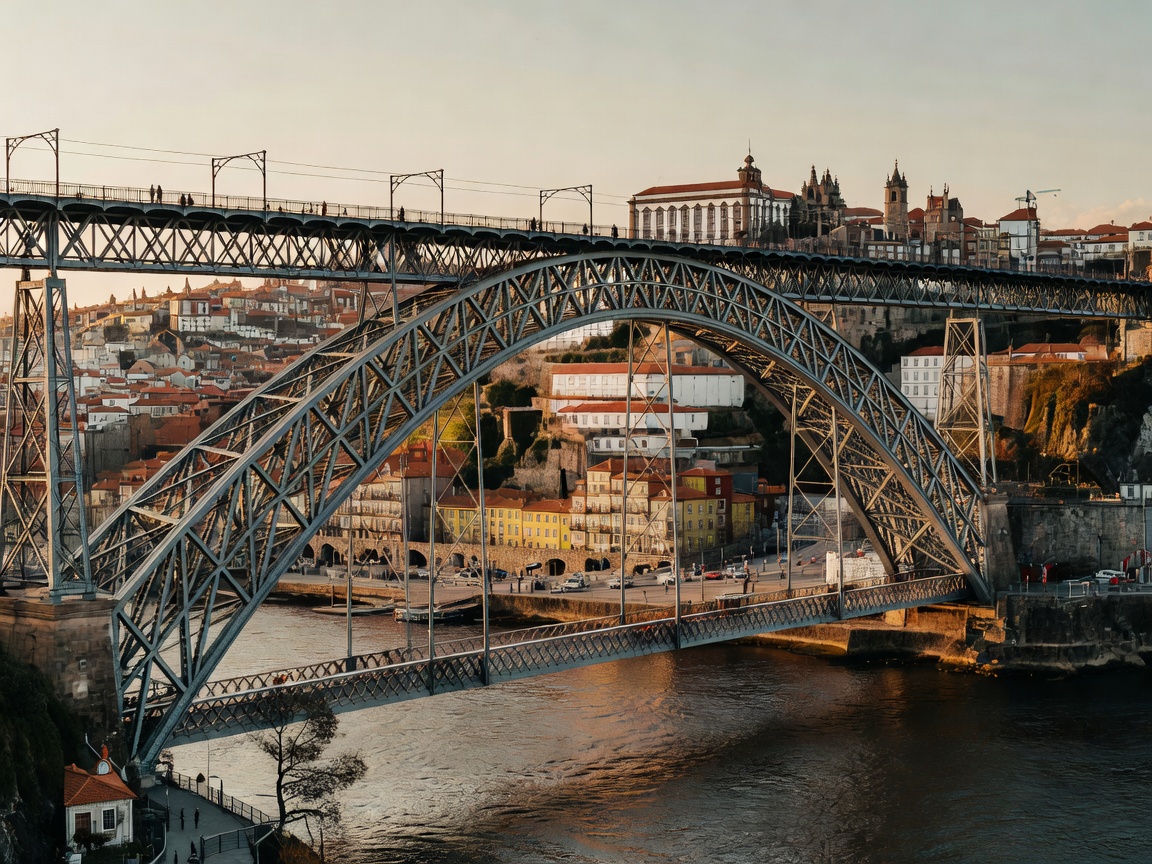
Across the double-deck metal arch bridge of Dom Luís I—designed by Théophile Seyrig, a disciple and former partner of Gustave Eiffel—lies Vila Nova de Gaia. Technically an independent municipality, Gaia is the historical maturation center for Port wine. Here, cool maritime Atlantic breezes penetrate the river mouth, maintaining ideal temperatures and humidity within century-old stone armazéns (cellars).
"The Alto Douro was demarcated in 1756, pre-dating Bordeaux and Chianti. Man transformed steep schist canyons into monumental stepped staircases of vines that catch every ray of continental sun."
Upstream to the Alto Douro Vinhateiro
Traveling east from Porto into the Alto Douro presents one of the most stunning transitions in European geography. As the train or river vessel bypasses the coastal Serra do Marão mountain range, Atlantic moisture gives way to a hot, dry continental climate characterized by fractured schist stone slopes.
Human hands have reshaped these precipitous hillsides for over two millennia into horizontal terraces (socalcos and patamares). The primary grape varieties—including Touriga Nacional, Touriga Franca, Tinta Roriz, and Tinta Barroca—burrow deep into the fractured rock to locate subsurface water, producing both world-famous vintage Ports and acclaimed unfortified dry Douro DOC red and white wines.
Porto & Douro Highlights
- Compact, highly walkable historic urban core with distinct character.
- Scenic rail journey along the Linha do Douro hugging the river's edge.
- Historic wine lodges offering educational cellar tours and tastings.
- Proximity to historic northern centers such as Guimarães and Braga.
Field Considerations
- Severe vertical elevation changes require significant stair climbing.
- Midsummer in the Alto Douro regularly exceeds 38°C; spring and harvest autumn are preferable.
- Boat cruises between Porto and Pinhão spend extensive hours passing locks.
- Winter brings substantial Atlantic rainfall to northern coastal regions.
Transit Options: Rail vs. Waterway
When traveling between Porto and the heart of the Douro Valley around Pinhão or Pocinho, we strongly advise independent travelers to utilize the scenic Linha do Douro train departing from São Bento and Campanhã stations. The train tracks run directly along the riverbank for more than 100 kilometers, offering panoramic sightlines at a fraction of the cost of tourist day-cruise vessels, and allowing flexible overnight stays in working wine estates (quintas).